














The Department of Agricultural and Biosystems Engineering at SDSU is marking its 100th anniversary this year.
ABE was started in 1925 to educate agriculture students on how to handle new technologies in the industry. Among the new technologies that year: tractors.
The department will celebrate its anniversary with a day-long event on Thursday, Nov. 6. The celebration will start in the morning with a farm equipment display from Case New Holland and Raven for students to interact with and continue through the night with an anniversary gala at Club 71 in the Dana J. Dykhouse Stadium.
The gala had an admission fee of $35 for students and $50 for general admission. The money collected from admission fees will contribute to a scholarship for a senior agricultural and biosystems engineering student to continue their education, said Kasiviswanathan “Muthu” Muthukumarappan, the Klingbeil endowed department head and distinguished professor.
“It’s important to recognize the accomplishments that have happened during the last 100 years, primarily so we know what we did and what are the opportunities that exist for the next 100 years and beyond,” Muthukumarappan said.
The agriculture industry has changed greatly since 1925 when the department was founded.
Now, the industry uses tractors, drones, automated systems and more in the production process.
Bryce Haubenschild, a sophomore agricultural systems technology and precision agriculture major said, “I think the thing that is so important about the department’s 100th anniversary is to recognize how much change has happened in that time and how drastically our idea of agriculture has evolved.”
The department’s mission is to give its students an elevated hand-on education that will help them serve in multiple sections of the ag industry, Muthukumarappan said.
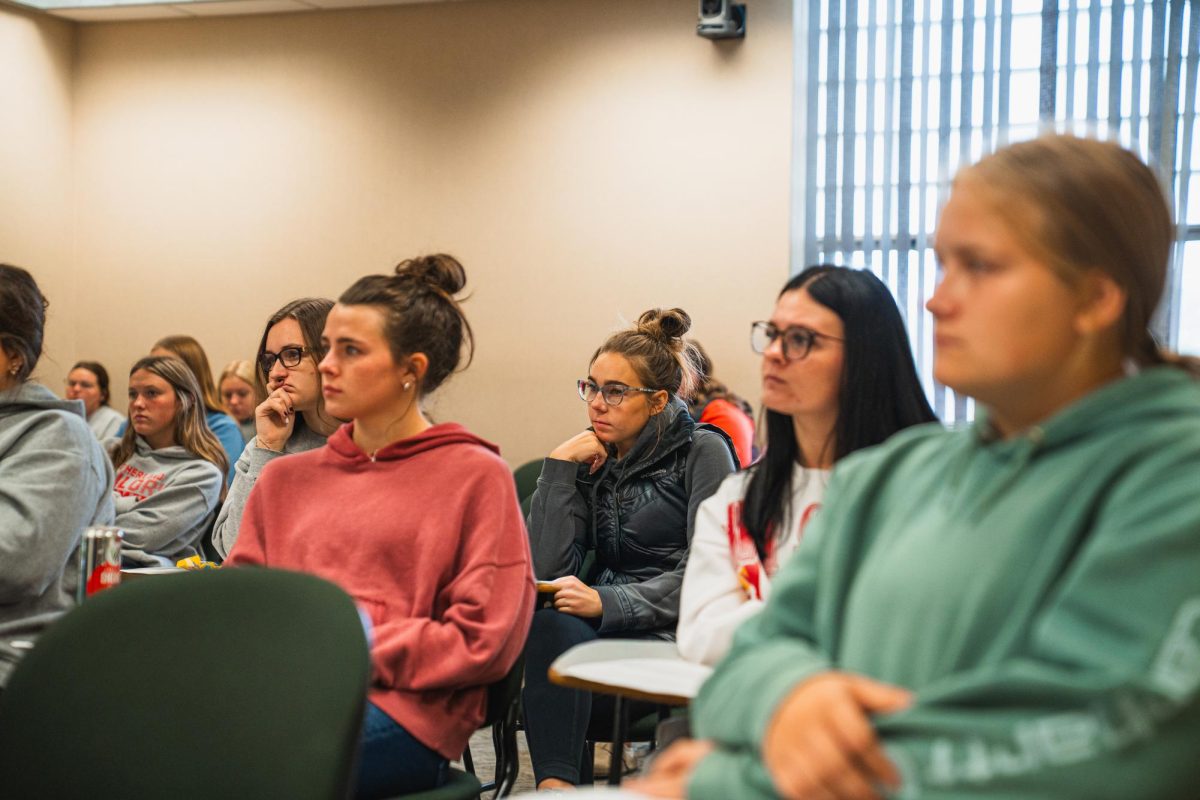
Today, the department offers three undergraduate majors: agricultural and biosystems engineering, agricultural systems technology (AST), and precision agriculture, and a graduate program for agricultural and biosystems engineering.
Agricultural and biosystems engineering is an undergraduate engineering program within the Jerome J. Lohr College of Engineering.
It is unique from other engineering degrees because it focuses on “designing the equipment facilities related to production agriculture,” said Van Kelley, a former department head of ABE. This may include tractors, buildings and drainage tiles.
Both the AST and precision agriculture programs are run by the College of Agriculture, Food, and Environmental Sciences. Agricultural systems technology has more of a practical application focus. Graduates generally work for the same companies as ag engineers, but they play more of a support role for farmers, Kelley said.
SDSU was the first school in the country to offer a four-year degree in precision agriculture, which looks at the use of agricultural technology and takes into consideration different economic factors.
“An ag engineer can design a sprayer. An AST student can help service and maintain that piece of equipment,” Kelley said. “The precision graduate is going to be the one that says, ‘OK, how much chemical and when do we need to do it and all the economic agronomic considerations that go into a good crop.’”
Agriculture relies upon these sectors in the industry. They “work toward feeding the world,” said.
Sydnee Hubner, a senior agricultural and biosystems engineering major, said, “Engineering is always updating, and equipment is always updating, and everything is always changing, but thankfully our program is, too.”
The department has continued to grow with the expansion of technology in the agriculture industry, and the department uses a council of industry professionals to keep up with the changes, Kelley said.
According to Kelley, the industry advisory council encompasses broad sectors of the ag industry. The council meets a couple times a year and answers the department’s question:
“What should we be doing to prepare graduates that you want to hire?”
Kelley said this results in valuable feedback, donations, modified curriculum and job offers for students.
The department plans to continue promoting the future of agriculture for the next 100 years.
The work of the department plays a critical role in the agriculture industry, so Muthukumarappan is certain that the department will be at the forefront of the new developments – from cutting edge technology to cybersecurity and AI, that are the future of the agriculture industry.
According to Muthukumarappan, the department hopes to take enrollment to the “next level” – from 200 undergraduate students to 300 – and bring “more research dollars and outreach dollars so we can serve the stakeholders and rural community in South Dakota.”