









SDSU President Barry Dunn told members of diverse student organizations on Thursday that a racist video shared via Snapchat “was terribly upsetting to (him) as a person and as a president of a university.”
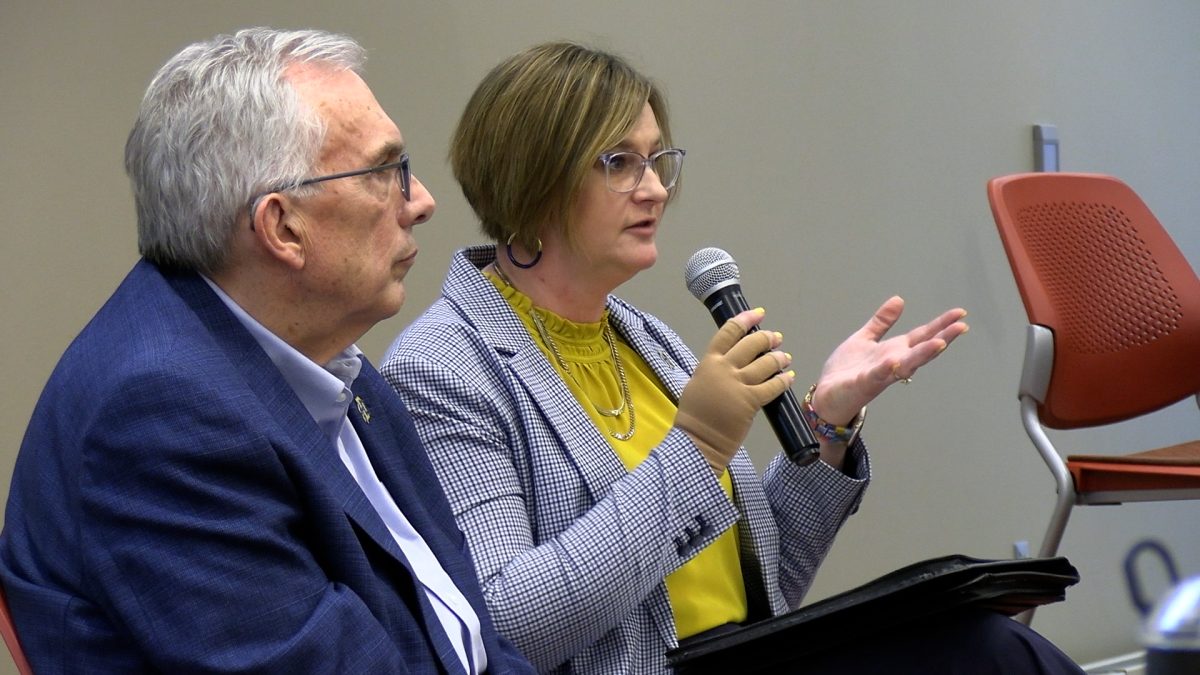
Dunn was joined by Michaela Willis, vice president for student affairs and enrollment management at SDSU. Dunn and Willis met with students and faculty from the American Indian Student Association and the Latin American Student Association in a joint meeting at the American Indian Student Center on campus. After, Dunn and Willis met with the Black Student Alliance in the Student Engagement Center in the Student Union.
Dunn and Willis updated attendees at the American Indian Student Center on the situation before turning the meeting over to students to voice their concerns.
The university is waiting for the Brookings Police Department to finish its criminal investigation before taking disciplinary action, Dunn said.
Willis explained that any action taken by the university will not be made public. The Family Educational Rights and Privacy Act (FERPA) protects students’ personal information from release. SDSU does not share any outcomes of investigations regarding student conduct or equal opportunity, Willis said.
“It’s not public information, and so I know that that is likely very hard to hear,” She said. “But that is part of our student code of conduct, and that is part of our federal requirements, that you have the right to privacy as a student.”
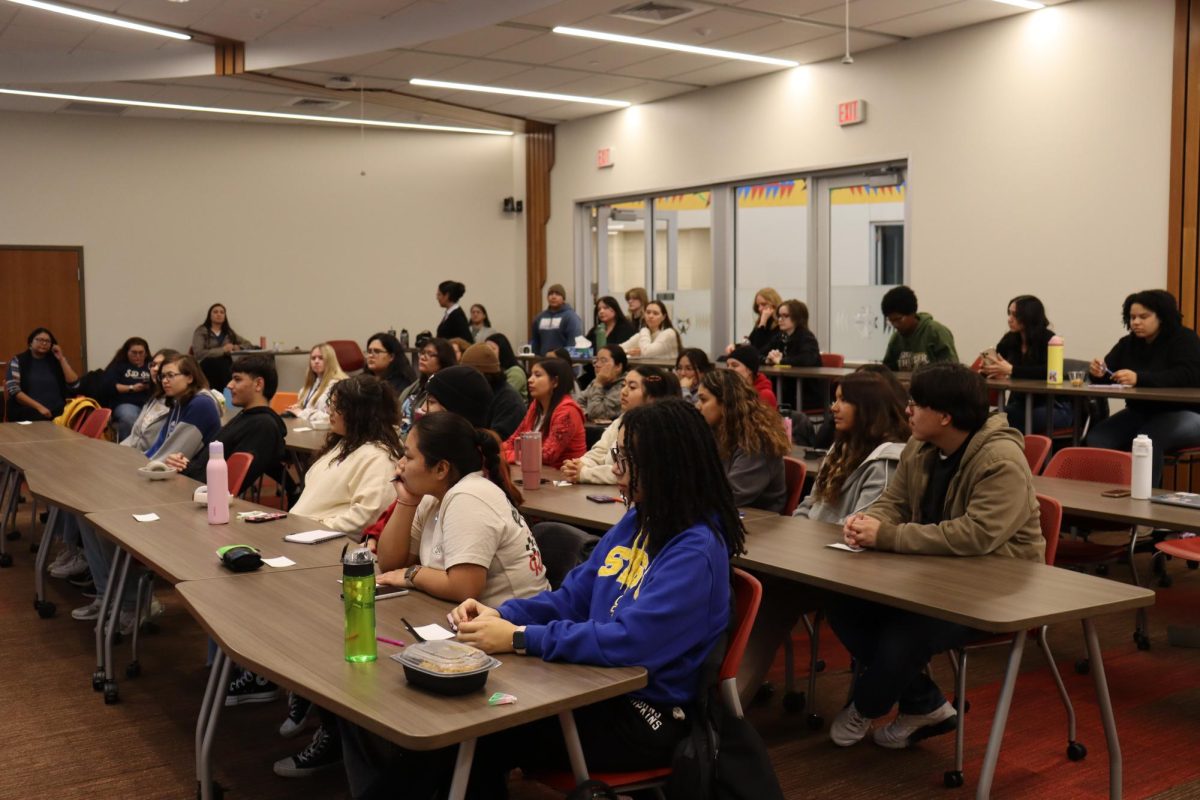
Students voiced concerns about transparency if a disciplinary action is not made public.
Dunn and Willis recognized the concerns but reiterated that they must follow FERPA regulations.
“The department of education, right now, is challenging to work with,” Dunn said. “There are consequences if we don’t follow federal law.”
Willis said the university is dedicated to implementing programs on topics such as building community and safety. She pointed students to resources for reporting issues, including the Title IX/Equal Opportunity Office, Student Connection and Engagement, and the University Police Department.
“If you see something, say something,” Willis said.
Dunn said he wants students to reach out if they feel they are not being heard.
“Seriously, if you’ve reported something, and we’re not acting on it, then my email’s really simple. [email protected],” Dunn said. If we are ignoring something, and you’re frustrated, the police have ignored it, or a staff person ignored it, then write me. Send me an email.”
Another student asked whether the university’s change from “Diversity, Equity and Inclusion” to “Opportunity for all,” implemented in September, played a part in this rhetoric being shared.
“Do you think (that) capitulating this sort of language policing kind of allows somebody to feel like it was somewhat acceptable to behave this way?” a student said.
Dunn said if the university didn’t comply with the federal government’s “threats,” student loans and grants would be at risk.
“The threat that the federal government made to universities was that if we didn’t change ‘diversity’ to ‘opportunity for all,’ you would not be able to get a federal student loan, we would not be able to get federal grants,” Dunn said.
Dunn said he appreciated the understanding of the bigger picture.
“Really tough times,” he said.
Dunn and Willis said they are willing to come back and meet with students again.
“After spring break, we’re still here. This is still an issue,” Dunn said. “If you want to do this again, we’ll do it again. Just so that you feel listened to, and you understand how much we care about you.”


