
















As South Dakota State University moves from one Hobo Day season into the next, the transition between Grand Pooba’s reflects more than a change in leader. It marks a shift in perspective.
Claire Koenecke, the 2025 Grand Pooba and a senior, double majoring in English and political science, recently returned to student life after a year spent helping lead one of SDSU’s most recognizable traditions. Sitting with her was Grace Barnett, a junior nursing student preparing to take on the role of the 2026 Grand Pooba.
Koenecke said the weeks following Hobo Day felt noticeably quieter. After months of constant planning and coordination, her schedule opened up in a way it hadn’t in years. She said the change allowed her to focus more on coursework, spend time with friends and visit her family more often. She appreciated that shift after a strained year of responsibility.
Despite the return to a more typical routine, Koenecke said the role reshaped how she sees campus life. Through late nights and behind-the-scenes work, her appreciation for SDSU and its traditions deepened.
“My love for the school really grew throughout the year,” she said, adding that the experience gave her a new respect for the effort required to bring campus events to life.
The path to becoming Grand Pooba, Koenecke explained, is both fast-paced and demanding. Applications for the following year open just a week after Hobo Day and require candidates to submit a vision plan outlining goals for multiple committees. Applicants then present their ideas to campus stakeholders and the outgoing committee, a process Koenecke described as intimidating but necessary.
Standing in front of peers and outlining what worked and what should change, she said, requires confidence and honesty. While vision also plays a role, Koenecke noted that leadership is evaluated long before the application stage. How candidates perform throughout the year, whether they’re dependable teammates, meet deadlines and work well with others, weigh heavily in the final decision.
Barnett said she’s approaching the process by focusing on what she can control. She described the application experience as meaningful, emphasizing the importance of professionalism and trust in a process where feedback remains confidential. Rather than fixating on results, she said she’s focused on presenting ideas she genuinely cares about.
Both women said their leadership experiences influenced how they carry themselves in academic and student spaces. Koenecke said serving as Grand Pooba gave her confidence to speak up more in class and in group settings.
“Not everyone will agree with me, and that’s okay,” Koenecke said. “Trying to share perspectives is really important.”
Barnett echoed that sentiment, saying her involvement in student leadership taught her to advocate for herself, even when doing so felt uncomfortable. She said learning to trust her voice has been one of the most valuable lessons she has taken from her time in leadership roles.
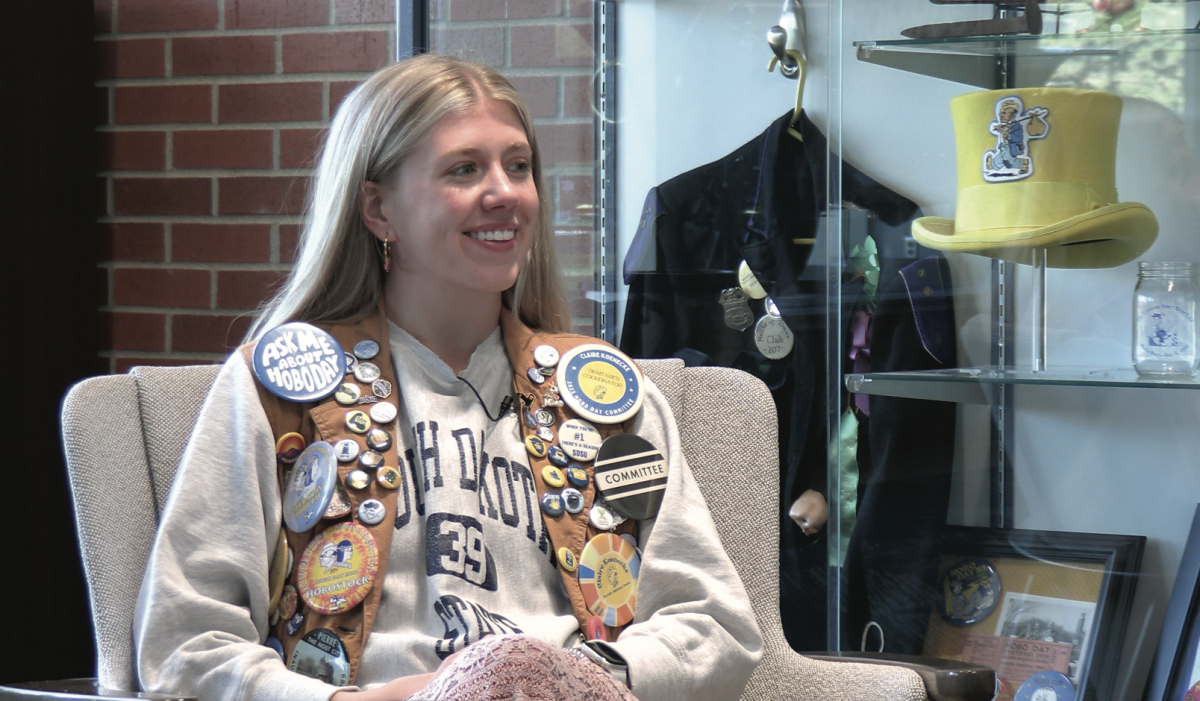
With visibility came pressure, Koenecke said, and managing expectations was one of the most challenging aspects of the role. She made a conscious effort to remain calm, particularly for the sake of her team.
“It’s really hard to work under people when you can tell they’re nervous,” she said, explaining that projecting confidence helped create stability during stressful moments.
Balancing leadership responsibilities with academics and personal life required constant prioritization. Koenecke said she learned to recognize when tasks needed immediate attention and when it was acceptable to step back. Sometimes, she said, that meant choosing rest or connection over productivity.
When reflecting on the most meaningful moment of her term, Koenecke pointed to the Hobo Day parade. After an early morning and an emotionally full week, she said driving through the route brought everything together. She attended her first parade as a baby. Seeing her parents, extended family and even her dog cheering from the sidelines was a moment she said she will always remember.
For Barnett, the parade has long been a defining part of Hobo Day. She said she has never missed one. What once meant candy and excitement has evolved into a deeper sense of belonging. Watching classmates and friends participate during her freshman year, she said, made her realize SDSU had become her home.
Both leaders described Hobo Day as something difficult to explain but easy to feel. Koenecke said students, alumni and even faculty who attended other universities often remark that there is nothing quite like it.
Koenecke said one of the most meaningful aspects of her year was the consistent support she felt from across campus. Students she had never met stopped to ask how planning was going, while faculty and alumni regularly offered help. That sense of collective investment, she said, defines SDSU.
As Barnett begins her term, she said what grounds her when leadership feels demanding is remembering that the work serves something larger than any individual. She hopes students feel represented and welcomed and can sense the care behind each event. Despite the visibility of the role, she emphasized that she is still a student navigating the same daily realities as everyone else.
Koenecke’s advice for Barnett, and for students considering leadership, was to approach the experience one day at a time.
“There are highs and lows throughout the year,” Koenecke said. “But the good moments definitely outweigh the hard ones.”


