










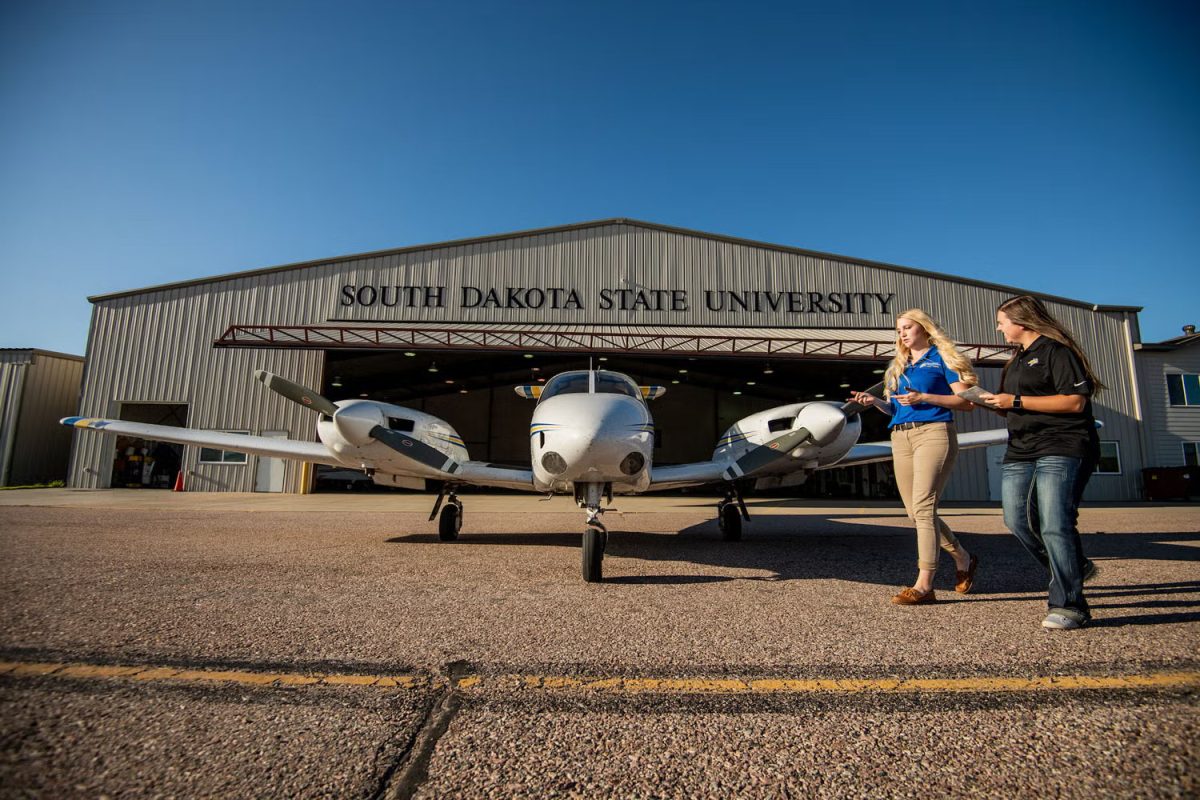
South Dakota State’s aviation program has increased from only 55 students in 2015 to 294 students in December of 2025, an increase of almost 24% year over year on average.
With an increase in students, comes an increase in demand to get into the air.
SDSU’s enrollment numbers, provided by Devin Bastemeyer, director of aviation operations, reflect a similar nationwide trend. The upward trend of aviation programs is mainly by COVID and forced early retirements creating a high demand, and the increase of salaries in aviation careers, Basetemeyer said.
Cody Christensen, an associate professor for the aviation program, explained that many students graduate from SDSU’s aviation program making approximately $100,000 annually.
“Our program is expensive, but the return on investment is definitely there,” said Christensen.
The aviation program costs about $90,827 on average, according to sdstate.edu. The aviation program’s operating expenses, including capital asset purchases such as airplanes, are completely funded by flight fees generated from the program, Bastemeyer said.
Despite the growth, Christensen, who will soon be entering his 17th year at SDSU, said the program is exactly where it should be. Many aviation programs throughout the country are at full or well over full capacity, while SDSU is “at a right capacity” for its program.
Along with gaining a full time faculty member, the program frequently upgrades its fleet of aircraft, Bastemeyer said.
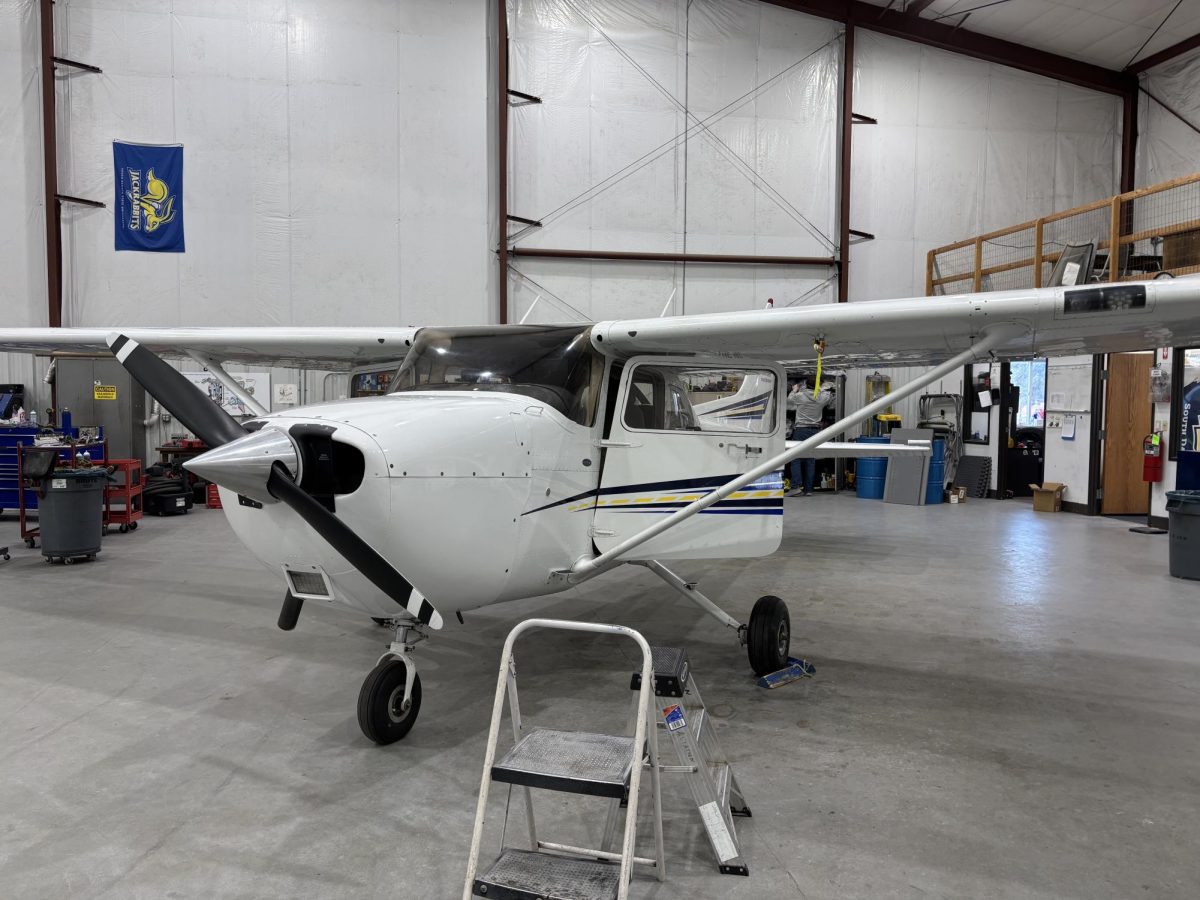
The program is in the process of buying a 2027 model Cessna 172 Skyhawk, which is the same aircraft used for the rest of the program’s single-engine fleet. It will be replacing an old model of the same aircraft, keeping the number of the program’s fleet the same.
The process of purchasing one of these aircrafts isn’t like writing a check to your local airplane dealership.
Just like any vehicle or appliance, after using an aircraft for so long, it will need to be replaced. Flight hours on each aircraft in the program’s fleet are regularly documented, Bastemeyer said, which gives the program an idea of what aircraft will need to be replaced, and when.
With this information, as well as statistics regarding the program’s enrollment and how many students need to be up in the air, Bastemeyer presented a request for a new aircraft to SDSU.
Once given the OK, the aviation program began talking with the Cessna company headquartered in Wichita, Kansas.
Bastemeyer described the process from there being like buying a car or a house; a downpayment is made on the aircraft while the school awaits the agreed delivery date. Once the aircraft is delivered and in the school’s hands, the final payment is made and the deal is done.
This is far from a quick process, though. According to Bastemeyer, the Cessna 172 listed for delivery in 2027 has already been on order for a year. Although this isn’t the typical 7-10 business days, Bastemeyer said that, due to projected engine usage on the planes, this is standard procedure.
“Even (with) our new aircraft, we’re already ordering engines for them because we know we’ll be at 2,500 hours in 2.5 to 3 years,” Bastemeyer said.
Classes and resources have also increased with the increased enrollment. Classes went from being offered once a year to multiple times, including the summer semester. As a result, most students will be in the air by their second semester or their first summer at SDSU, depending on prerequisites.
This has created a rare situation where SDSU does not require an application to enter the program, only a semester of aviation classes. Students have ultimately become “higher caliber” because of this system, Christensen said.
Christensen encourages incoming students to earn their wings right here in Brookings.
“If you don’t want to be in an office every day, if you like high risk, high reward type situations, and if you work well under pressure,” Christensen said. “Those are the types of students that do really well in our program.”


