















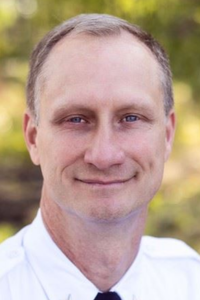
SDSU officials aim to have a permanent police chief in place by the start of the next academic year, following Tim Heaton’s departure in December.
The timeline comes amid a permanent structural shift for the University Police Department (UPD), which now reports directly to SDSU’s Vice President and General Counsel, Tracy Greene, rather than the vice president for technology and security.
“That would be a good gold standard for us to have someone permanent in place for the next academic year,” Greene said.
Brookings Police Department (BPD) Chief Michael Drake has been serving as interim police chief since Jan. 9. His appointment follows the vacancy left by former Chief Tim Heaton, who is facing felony charges of cruelty to animals following his arrest in late November. The university has decided against a rushed hiring process. Instead, officials are prioritizing a transition period to make sure the department is stable before bringing in a new long-term leader.
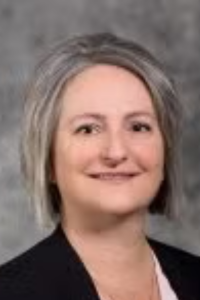
“They didn’t want to just throw something at the wall and walk away from it,” Drake said regarding the administration’s strategy. “I think the university was very intentional on what they wanted to do.”
Drake said that while the process might have seemed “clunky” initially, the university is taking its time to consult with local law enforcement and assess the department’s needs. Before a permanent replacement is selected, Greene said the search process will rely heavily on input from the campus community to shape the role’s description.
“We want to gather more feedback on that before we make decisions,” Greene said.” [We want to] get more university feedback from students, from others, and from the community when we make those final decisions.”
STRUCTURAL ORGANIZATION
Amid the search for new leadership, UPD is also undergoing a permanent structural realignment.
According to Greene, President Barry Dunn has moved UPD under the supervision of the Office of General Counsel, which Greene leads. This shift places UPD alongside Environmental Health and Safety, a move designed to consolidate the university’s safety operations, Green said. Previously, the police department reported to the Vice President for Technology and Security David Overby.
Greene clarified that this restructuring is separate from the temporary appointment of Drake and is intended to serve as the university’s long-term operating model. The goal, she said, is to promote better collaboration between the various safety entities on campus.
“What we’re really thinking is going to be a synergy of all the public health and safety activities… so that they can all work very, very efficiently and effectively together instead of having them in different departments,” Greene said. “We’re looking for the highest impact activity.”
While Drake has stepped into the role of interim chief, he is also staying in his position as chief of BPD. He said the day-to-day operations of the two departments remain separate. He also confirmed that no Brookings police officers have been brought in to patrol the UPD jurisdiction.
A longstanding agreement has been in place for BPD to assist UPD with major on-campus events, such as game days. The most recent agreement, in which Drake took on the interim chief duties, is an addendum to the original agreement and focuses on leadership rather than a merger of the patrol forces.
As part of the agreement, SDSU will reimburse the city $8,000 per month for the duties performed by Drake, $1,000 per month for administration and the cost of legal fees incurred by the city with City Attorney Vincent Jones and Woods Fuller Shultz & Smith, P.C.
In terms of the current strength of the force, Drake said UPD’s staffing levels are stable. He said the department has between 25 and 30 employees, including dispatchers and student patrol. The law enforcement staff consists of about 10 to 12 full-time officers and six to eight part-time officers.
Drake said that these numbers are appropriate for the campus population of 12,000 students and 2,000 staff members.
“I think we fall right where the national average is, where SDSU should be for their coverage for public safety for the university,” Drake said.
Drake sees his temporary tenure as an opportunity to stabilize the department and prepare it for the next long-term leader. He intends to focus on documentation and minor efficiencies during the transition.
“My job is to make sure that that person that comes in [as the new chief] is set up for success and not failure,” Drake said. “That they’ll have all those minor changes and the blueprint laid out.”
COMMUNICATION & MORALE
Drake was asked about one concern in particular. The daily crime log is a document prepared by UPD that provides details on calls they have taken over the past week. The crime log is sent to Collegian Media for publication every Monday. There are times when students have seen a police presence in front of a resident hall, but the incident has not been listed on the crime log the following week.
Drake acknowledged these concerns and said quelling the campus “rumor mill” is a priority for his term. He said that silence or poor communication by police can allow misinformation to spread and create panic or distrust.
“There’s nothing worse than having confusion on campus… rumors start flying,” Drake said. “I always like to make sure that we get the story straight the first time.”
He framed his approach to campus policing as a service industry, viewing the students, staff and community members as the department’s patrons.
Despite the controversy surrounding the former chief’s exit, Drake described the current atmosphere inside UPD as resilient. He said that when he came in, he expected the force’s morale to be lower, but that he hasn’t seen that.
“It hits your morale when you lose a best friend or when you work with somebody for so many years… but they really do get along.”
He said his main goal is to provide stability during the transition period.
“Change is difficult for anyone… My job right now is to look, listen, right? Hang out, think about it… to make sure that everybody feels safe and secure and to be able to support those officers,” he said.
UPD ACCREDITATION STATUS
Along with the organizational and leadership changes, UPD is also going through its reaccreditation process, conducted by the International Association of Campus Law Enforcement Administrators (IACLEA).
When it was first accredited in 2017, it was one of only 48 campus departments to earn the international accreditation, according to a 2017 news release from SDSU Marketing and Communications.
Even with all the changes being made, Greene said the university can let IACLEA know about the situation and they can update their report.
“At this juncture, I have no reason to believe that this restructure would have any impact whatsoever on the reaccreditation.” She said.
IACLEA held a public comment period on UPD last October, and Greene said the organization has completed its review and that SDSU is awaiting the report.