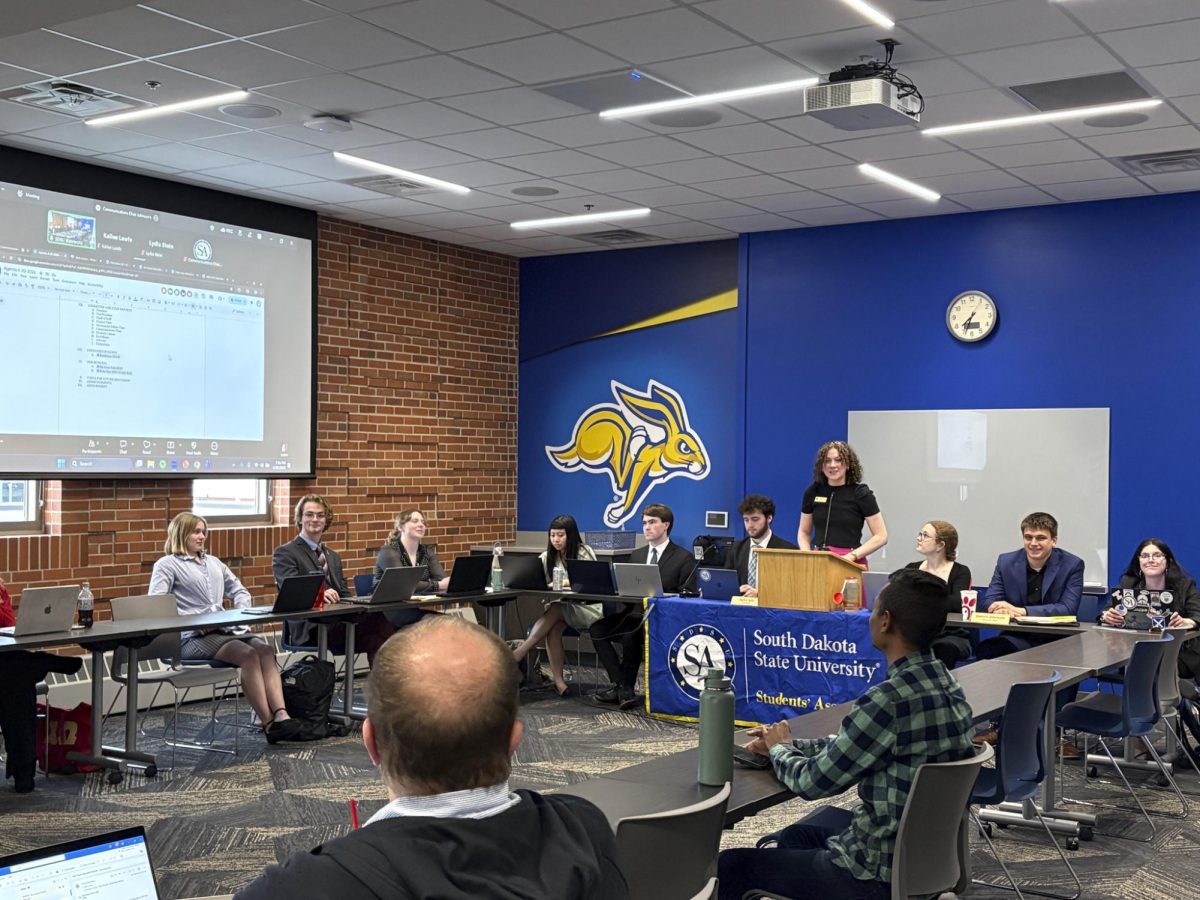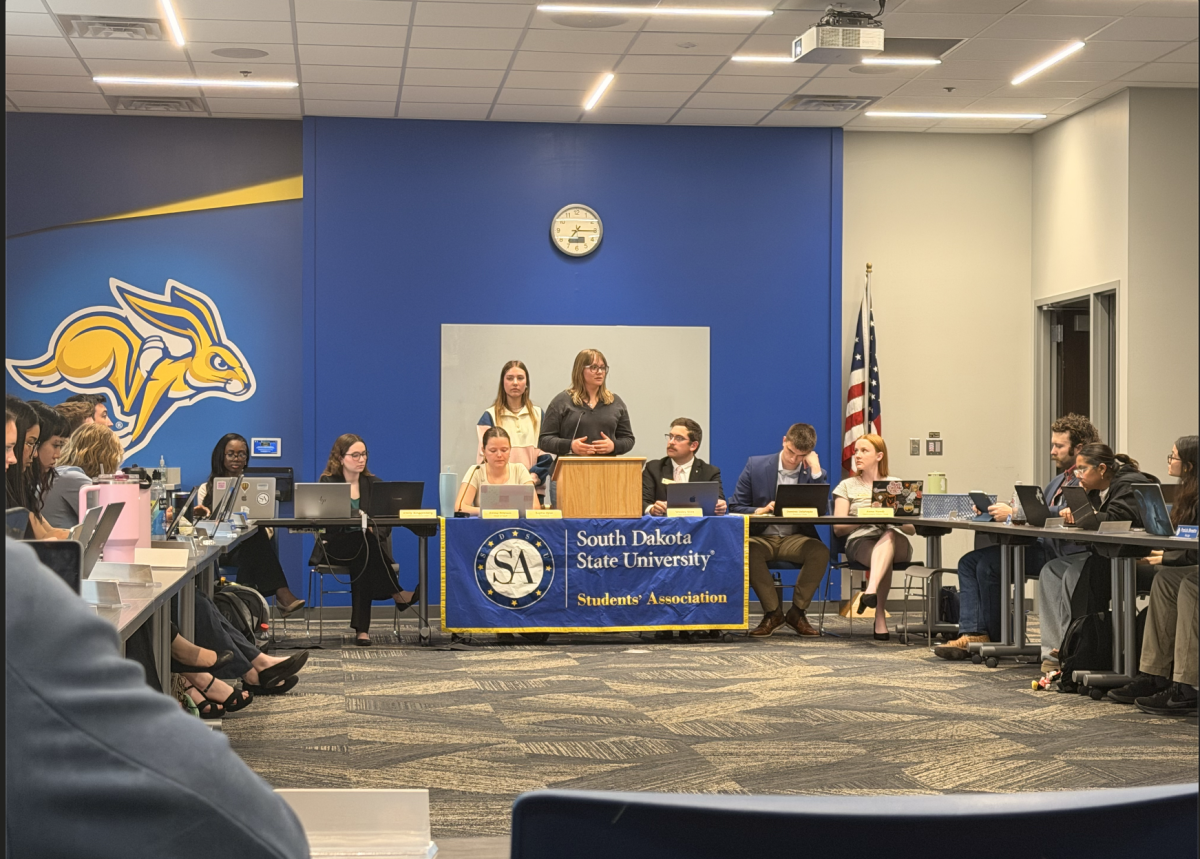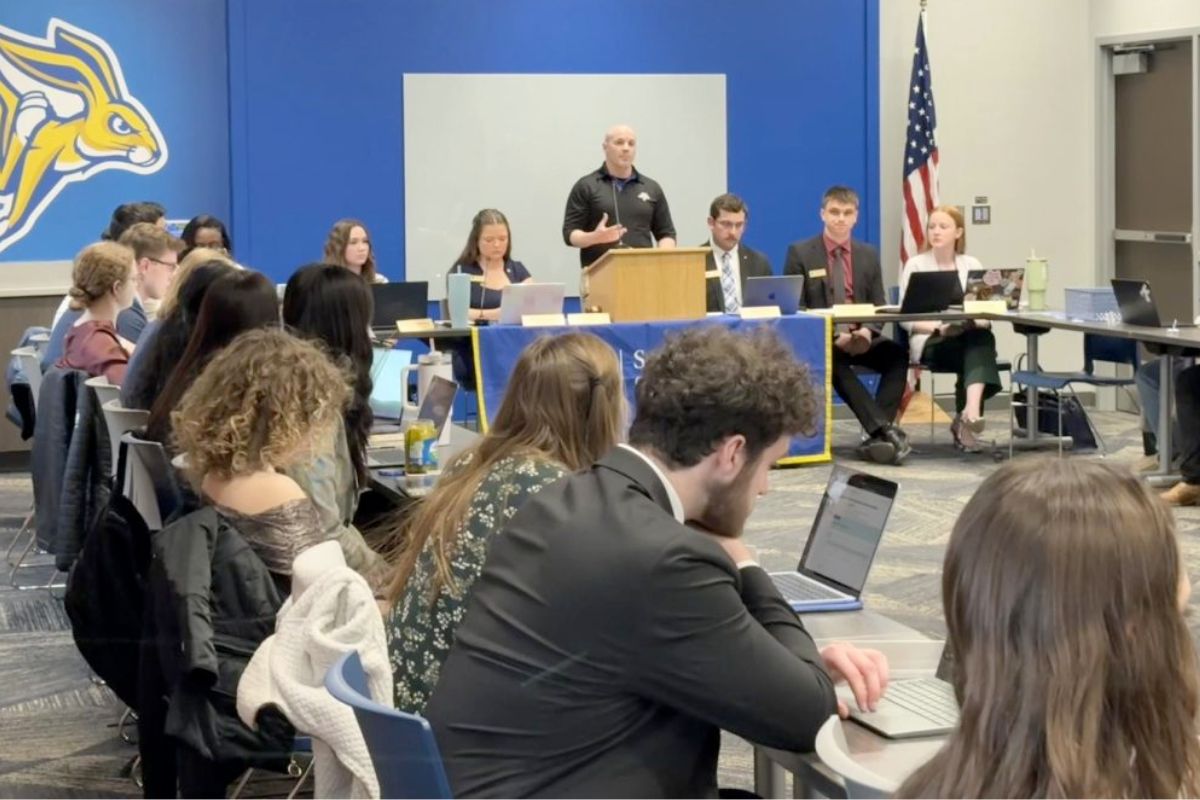
















Former Students’ Association Vice President Hayden Bentz was ‘disappointed’ about the results of last week’s debate at this Monday’s meeting for SA.
A lengthy debate was held last week, discussing Amendment 25-1-A, a budget about campaign spending which would decrease presidential and vice-presidential spending from $2,500 to $750, and senatorial from $2,500 to $100. The amendment failed with 13 senators voting no, 9 voting yes, and 1 abstaining.
During public comment, Bentz spoke about his reactions after listening to the debate.
“No piece of legislation is perfect, and I think it’s a product of many different amendments that might be made to it and compromises made throughout the writing of it,” Bentz said. “(However) I ended up being a little disappointed by the vote that the Senate ended up taking out to legislation.”
He also explained how the $2,500 limit came to be during his time in SA as vice president, along with former SA President Trinity Peterson, after a past campaign ‘spent upwards of $10,000.’
“I think that is an absolutely absurd amount of money to spend on a student government campaign,” Bentz said. “So, really, we looked at that historical campaign spending and arrived at a figure of $2,500 (and) we felt that that was an appropriate amount of money at the time to initially set that camp at.”
Bentz thinks that each senator’s responsibility at SA holds more importance than the amount of money spent on campaigns.
“At the end of the day, we’re here to represent our fellow students,” Bentz said. “I think that is the greatest thing that we can do with representatives of our student body,”
Open Forum
Daniel Scholl, vice president for research & economic development and professor at SDSU, spoke about the importance of research for the University and what has been accomplished so far in the Pathway to Premier 2030 strategic plan for achieving R1.
Currently, SDSU checks off the box for the benchmark of $50 million of research expenditures, with $94 million spent in fiscal year 2026. However, the University does not reach the other benchmark of awarding 70 annual doctoral degrees.
“The threshold is 70,” Scholl said. “We award between 30 and 50 every year. It’s very volatile; it bounces around a lot.”
Scholl said that there is all kinds of research happening at SDSU, including working towards replacing red and yellow artificial dyes with natural sources.
These dyes are used in food products, cosmetics and pharmaceuticals, to name a few.
“That will become critically important as new federal policies come into effect that limit or eliminate the use of artificial or synthetic dyes,” Scholl said. “So, that’s one thing we’re doing here that’s very unique.”
Other research being done includes the use of artificial intelligence and flow dynamics for respiratory disease in pharmaceuticals, and a creativity project involving the making of an album in partnership with the School of Performing Arts, which may be recognized as a Grammy nominee in the future.
New Business
Commemoration 25-2-C was approved, which celebrates November as the Native American Heritage Month at SDSU.